Cleanup Options & Costs
No final remedy has been chosen for any of the parks. The city hired A1 Consulting in October 2026 to compare the options at four of them. Here is what's on the table and what each choice trades away.
The money
The city has identified $12 million for cleanup. The state’s preliminary estimate for capping all five parks is about $24.4 million. That leaves a gap of roughly $12.4 million before anyone has opened a single bid, and bids have a way of coming in high. The city says it is willing to explore other funding sources; so far we have not seen a plan for closing the gap.[4]
Separately, Council approved up to $674,757 for A1 Consulting Group ($643,415 plus contingency) to review the data and compare remedies at East Durham, Lyon, Northgate, and Walltown. East End is on its own redevelopment track. Reporting suggests the study may take four to six months.[5, 6]
The options
Dig it out (targeted excavation, off-site disposal)
For: Actually removes contamination from the worst spots. Fewer long-term restrictions on how the land gets used.
Against: Expensive. Truck traffic, dust control, root damage, and verification sampling all add cost and disruption.
Cover it up (engineered cap or clean soil cover)
For: Can restore recreation without digging out deep waste. Usually cheaper and faster than full removal.
Against: The waste stays. Caps need maintenance forever, digging is restricted, and drainage and flood erosion become long-term liabilities.
Mix and match (hybrid remedies)
For: Matches the fix to how each area is actually used. Could let sections reopen in phases.
Against: Needs careful mapping and honest prioritization, or it becomes a way to defer the hard parts.
Rebuild (reconfiguration or redevelopment)
For: Playgrounds could move to clean ground, and overdue upgrades could ride along.
Against: Tying basic access to a big capital project can add years. Equity questions about who waits.
Stopgaps (interim barriers, partial access)
For: Doesn't wait for the final design. Could return some space to neighbors soon, if safety review supports it.
Against: A stopgap, not a cleanup. Needs state and health sign-off.
For reference, the city’s May 2026 update describes cap-and-cover as potentially a geotextile layer plus at least 12 inches of clean soil.[4, 6]
What about the trees?
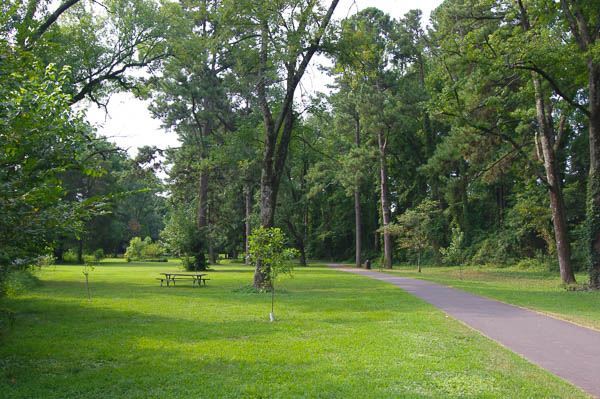
Ask anyone who loves Northgate or Walltown what makes the park and they’ll mention the shade. Heavy excavation can kill mature trees, and a tree that took eighty years to grow does not come back on a project schedule. We think the remedy comparison should take tree survival as seriously as it takes cost.
There are techniques worth evaluating. Hydro-excavation uses water and suction to remove soil around roots; pneumatic (air) excavation does it with compressed air. Both can expose roots with less brute-force damage than an excavator bucket, and both have real drawbacks: slurry disposal, dust capture, water pressure injuring fine roots, and cost. Neither is proven to allow full soil removal under a mature tree, and roots reach far beyond the trunk. Grade changes and equipment traffic can hurt a tree even when no root is cut.[20, 21, 22]
Our position: the city and its consultants should explicitly compare tree-preserving methods against standard excavation and capping, publish the expected tree impacts of each option, and run a small pilot before making choices that permanently change these parks. To be clear, no one has proposed hydro-excavation for Durham yet. This is our request, informed by the arboriculture and EPA guidance cited below, not an announced plan.[20, 21, 22]
Questions we’ve posed to Durham and A1
- Has Durham mapped the mature trees and their root-protection zones at each park?
- Do the remediation scenarios quantify expected tree loss, and say how it could be reduced?
- Will the city evaluate conventional excavation combined with hydro- or air-excavation around roots?
- Could a small supervised pilot compare tree preservation, contaminant removal, cost, and schedule against capping?
- How would lead-bearing slurry, dust, erosion, and runoff be controlled and disposed of?
- Where contaminated soil must stay near trees, what cap design and long-term maintenance would keep people protected?